

Outputs
More information about our research papers, reports, blogs and news.
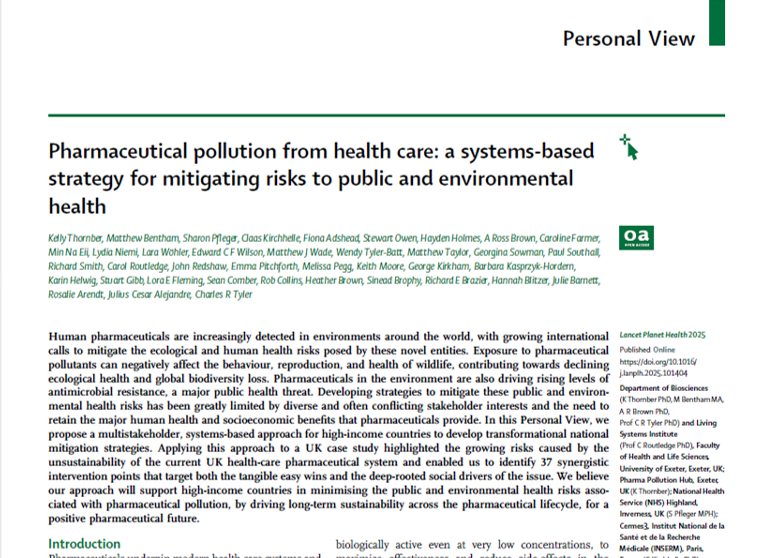
PPH publishes foundational work for building a sustainable pharmaceutical future
Human pharmaceuticals are increasingly detected in environments around the world, with growing international calls to mitigate the ecological and human health risks posed by these novel entities. Exposure to pharmaceutical pollutants can negatively affect the behaviour, reproduction, and health of wildlife, contributing towards declining ecological health and global biodiversity loss. Pharmaceuticals in the environment are also driving rising levels of antimicrobial resistance, a major public health threat. Developing strategies to mitigate these public and environmental health risks has been greatly limited by diverse and often conflicting stakeholder interests and the need to retain the major human health and socioeconomic benefits that pharmaceuticals provide. In this Personal View, we propose a multistakeholder, systems-based approach for high-income countries to develop transformational national mitigation strategies. Applying this approach to a UK case study highlighted the growing risks caused by the unsustainability of the current UK health-care pharmaceutical system and enabled us to identify 37 synergistic intervention points that target both the tangible easy wins and the deep-rooted social drivers of the issue. We believe our approach will support high-income countries in minimising the public and environmental health risks associated with pharmaceutical pollution, by driving long-term sustainability across the pharmaceutical lifecycle, for a positive pharmaceutical future.
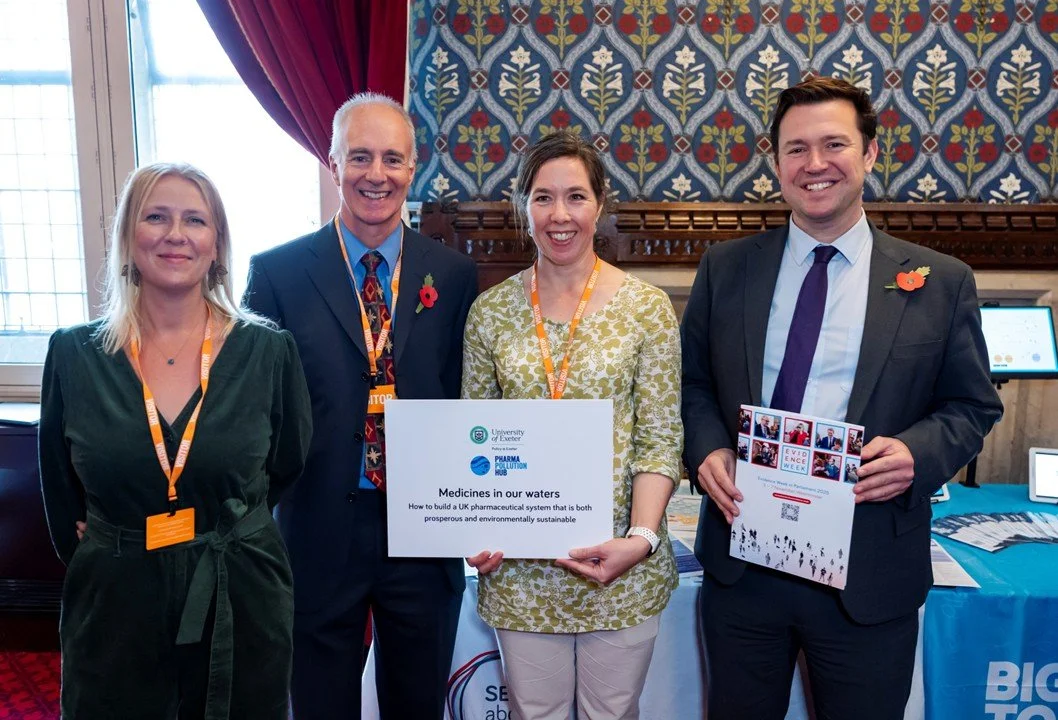
Pharma Pollution Hub attends Evidence Week in UK Parliament
Pharma Pollution Hub attends Evidence Week in Parliament to present our research analysing the UK healthcare pharmaceutical system.

Starting the conversation: Integrating pharmaceutical pollution into sustainable finance initiatives
Sustainable finance initiatives are designed to mobilise private sector investment to support the transition towards a sustainable global economy. These initiatives are expanding to integrate broader environmental issues. So, we asked a panel of experts, what are the opportunities and challenges for integrating pharmaceutical pollution into sustainable finance initiatives?

Consortium Spotlight: Meet Dr Hannah Blitzer Senior Policy Officer at Wildlife and Countryside Link
Welcome to our Consortium Spotlight, where we shine a light on our diverse community of experts dedicated to reducing the environmental impact of medicines in UK healthcare. This month we feature Dr Hannah Blitzer Senior Policy Officer at Wildlife and Countryside Link.

Consortium Spotlight: Meet Melissa Pegg Senior Research Consultant from York Health Economics Consortium
Welcome to our Consortium Spotlight, where we shine a light on our diverse community of experts dedicated to reducing the environmental impact of medicines in UK healthcare. This month we feature Melissa Pegg, a Senior Research Consultant in Environmental Sustainability in Health Technology Assessment.

Consortium Spotlight: Meet Professor Heather Brown from University of Lancaster
Welcome to our Consortium Spotlight, where we shine a light on our diverse community of experts dedicated to reducing the environmental impact of medicines in UK healthcare. First, we have the pleasure of featuring Professor Heather Brown, a distinguished health economist and Professor of Health Inequalities.

Social prescribing and sustainable pharmaceutical use
Find out from experts and practitioners how social prescribing can help make pharmaceutical use more sustainable.
Integrating pharmaceutical pollution into healthcare decision-making
To reduce the impact of pharmaceutical pollution, one leverage point is to include the environmental impact of pharmaceuticals in healthcare decision-making. Read the full report to find out how…

Welcome to the Pharma Pollution Hub
Medicines like aspirin, anti-depressants and blood pressure drugs, are being used more and more by people. But more medicines for us means more medicines ending up in our rivers and seas, creating a dangerous cocktail for fish, wildlife and humans.

What is a systems thinking approach to change?
Co-Director Kelly Thornber explains how we apply a systems thinking approach to solve the challenge presented by pharmaceutical pollution.

Article in Health Europa Quarterly by Kelly Thornber
Kelly Thornber, Co-Director of the Pharma Pollution Hub, has published an article in Health Europa Quarterly, discussing the challenges of addressing pharmaceutical pollution from healthcare.

Paper published in the Lancet Planetary Health
Academics from across the University of Exeter have joined forces with thought leaders from other universities, industry, government and non-profit organisations, to call for societal-wide action on reducing pharmaceutical pollution from human healthcare.